This lesson guide was created with support from a 2024 United States Department of Agriculture Patrick Leahy Farm to School Grant and a 2024 Onion Foundation Environment Program Nature Learning Grant.
Introduction
Trees bearing edible fruits and nuts have been an integral part of food webs and natural ecosystems for thousands of years. Apples, pears, peaches, plums, cherries, citrus, almonds, and many others are widely available around the world. Early additions to cultivated land, orchards have been intentionally planted by people to guarantee a bountiful harvest of these delicious and nutritious treasures. Planting a school orchard creates a dynamic, living educational tool that’s perfect for hands-on explorations, engaging observation, and experimentation. Orchards provide students with the opportunity to learn about food origins as they also discover how to contribute to local food security. Planting and caring for trees, harvesting fruit, and other orchard activities not only nurture lifelong skills, they also bolster an enthusiasm for eating nutritious and tasty fresh foods. School orchards foster environmental awareness and community connections too!
How to use this guide
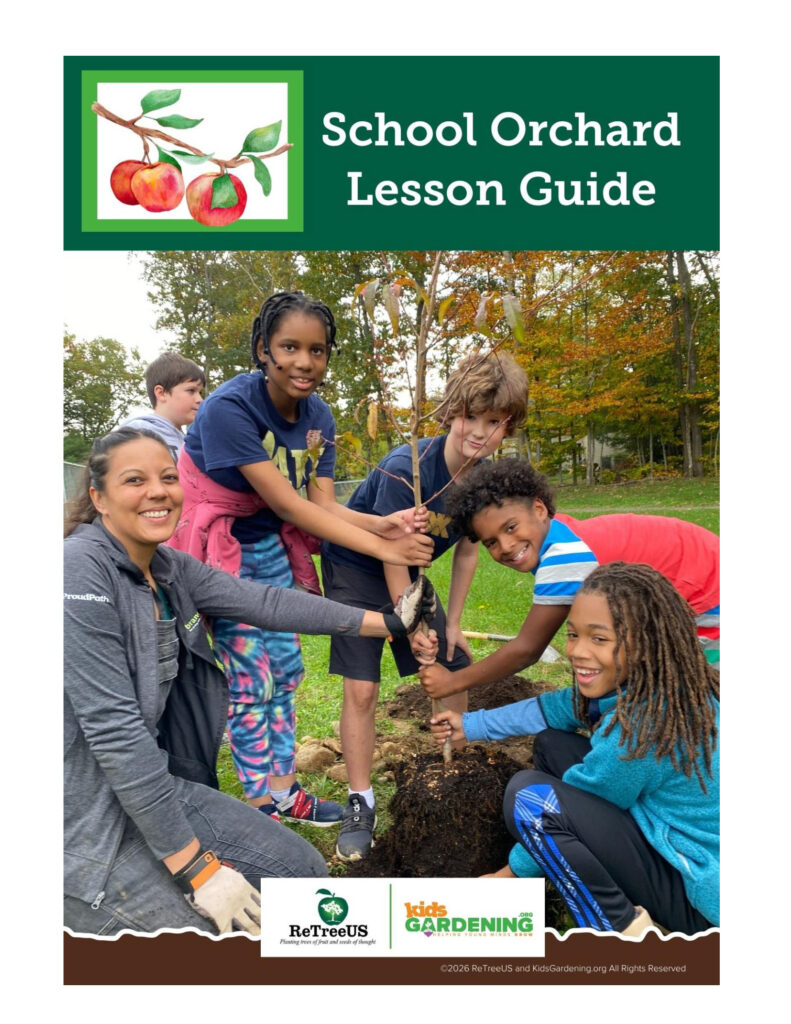
This guide was created to help educators integrate a school orchard into their curriculum to maximize its use as an educational tool. It includes 10 modules designed to connect with K through 6th Grade Next Generation Science Standards, but it can be linked to other areas of the curriculum if desired. The modules are sequenced so that each topic builds upon the previous topics. However, they can also be used independently, in any order. Depending on how often classes visit the orchard, a different module could be taught each month of the school year or used more intensely as part of a dedicated Orchard Unit. The modules could also be spread out seasonally among different grade levels and introduced during orchard visits over multiple years. The pacing of implementation can vary greatly based on time and resources available for school orchard programming.
Download the School Orchard Lesson Guide
This lesson guide was created by KidsGardening and ReTreeUS with support from a 2024 United States Department of Agriculture Patrick Leahy Farm to School Grant and a 2024 Onion Foundation Environment Program Nature Learning Grant.
By downloading the Orchard Guide, your email will be added to the KidsGardening email list, and shared with ReTreeUS.
By the end of the modules, students should have:
- Developed an appreciation for orchards and the important contributions they make to our food system and ecosystem.
- Grown in their understanding of plant needs and basic botany of fruit and nut trees.
- Gathered a solid knowledge foundation for how to plant and maintain orchards.
- Sharpened their observation and investigation skills through hands-on explorations.
- Had fun participating in engaging activities! Let the learning begin!
About the Partners
ReTreeUS
The mission of ReTreeUS is to inspire generations of food growers, environmental stewards and problem solvers through experiential education in orchards and gardens with the vision of creating a fruitful educational garden in every community.
KidsGardening
Since 1982, KidsGardening has been a leader in the youth gardening movement. As a national nonprofit, KidsGardening creates opportunities for kids to learn, grow, and play through gardening, engaging their natural curiosity and wonder by providing inspiration, community, and original educational resources.
Related Resources

Excited to garden with kids?
Explore more resources, discover funding opportunities, ask questions, and learn with other gardeners in the Kids Garden Community. Join FREE today to start connecting, sharing, and growing with educators and parents just like you!