
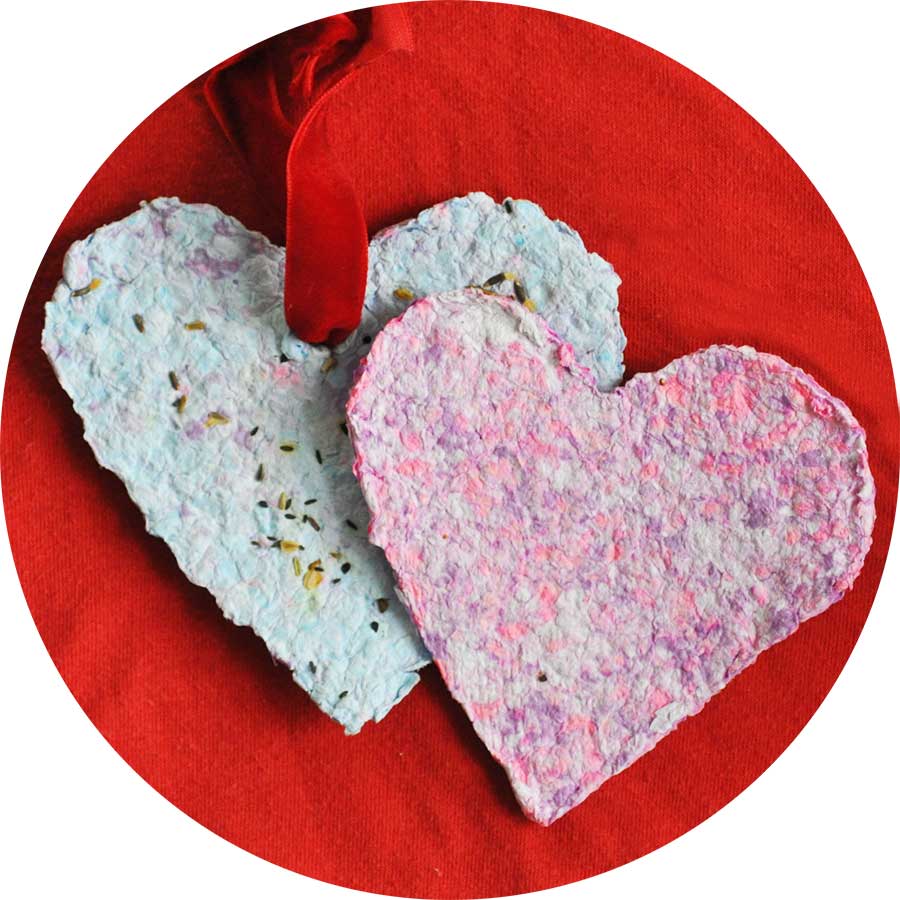
Creating homemade paper is a fun year-round activity. These handmade paper Valentines hearts are beautiful to give to family and friends, and you can even make them into “plantable” seed paper by pressing seeds into the surface.
Materials
- Scrap paper (suggested types listed below)
- Wooden frame (build your own or use an old picture frame)
- Window screening (you’ll need one pieces that’s slightly larger than the frame, and several smaller pieces)
- Staples (for tacking screen to frame)
- Piece of rigid plastic or corrugated cardboard at least 1/8″ thick OR heart-shaped cookie cutter
- Blender (for making pulp)
- Old towels and/or large rags (to soak up water)
- Sponges
- Seeds (small seeds work best, such as Johnny Jump Up, poppy, and wildflower seed mixes)
- Optional: bits of fresh or dried flowers, aromatic herbs, essential oil, seeds, dryer lint (which helps make stronger paper)
Instructions
Making paper is a wet, messy process! Cover surfaces with plastic to waterproof them. Have plenty of old towels, rags, sheets, and sponges for both making the paper and cleaning up afterwards. Note that the dyes in colored papers can stain surfaces like countertops, so protect them, too.
Gather scrap paper, such as recycled office paper, envelopes (remove any plastic windows), colored paper, and uncoated gift wrap. Pieces of any size are fine, because you’ll be tearing the paper into pieces. (If you have access to an office paper shredder it might be a good source of pre-shredded paper!) You can use small amounts of glossy or coated papers as well as newspapers, but don’t make them the primary ingredient. Printed office paper often yields a gray-ish homemade paper, so consider your color scheme and include papers in those colors. (Another option is to add beet juice, cranberry juice, or food coloring to the white paper.)
Tear the paper into pieces about an inch square (or smaller). Cover the paper with warm water and let it soak for at least two hours.
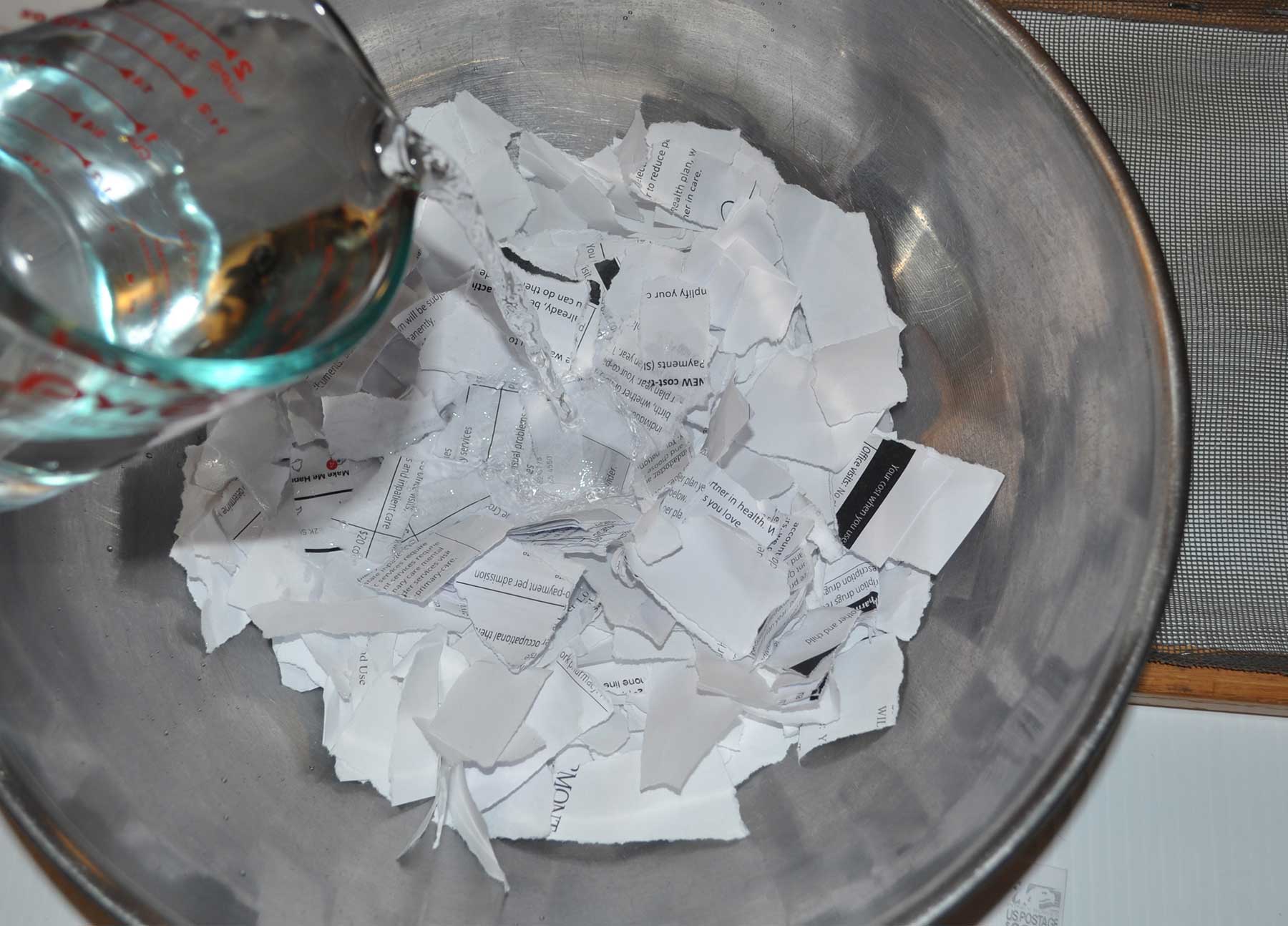
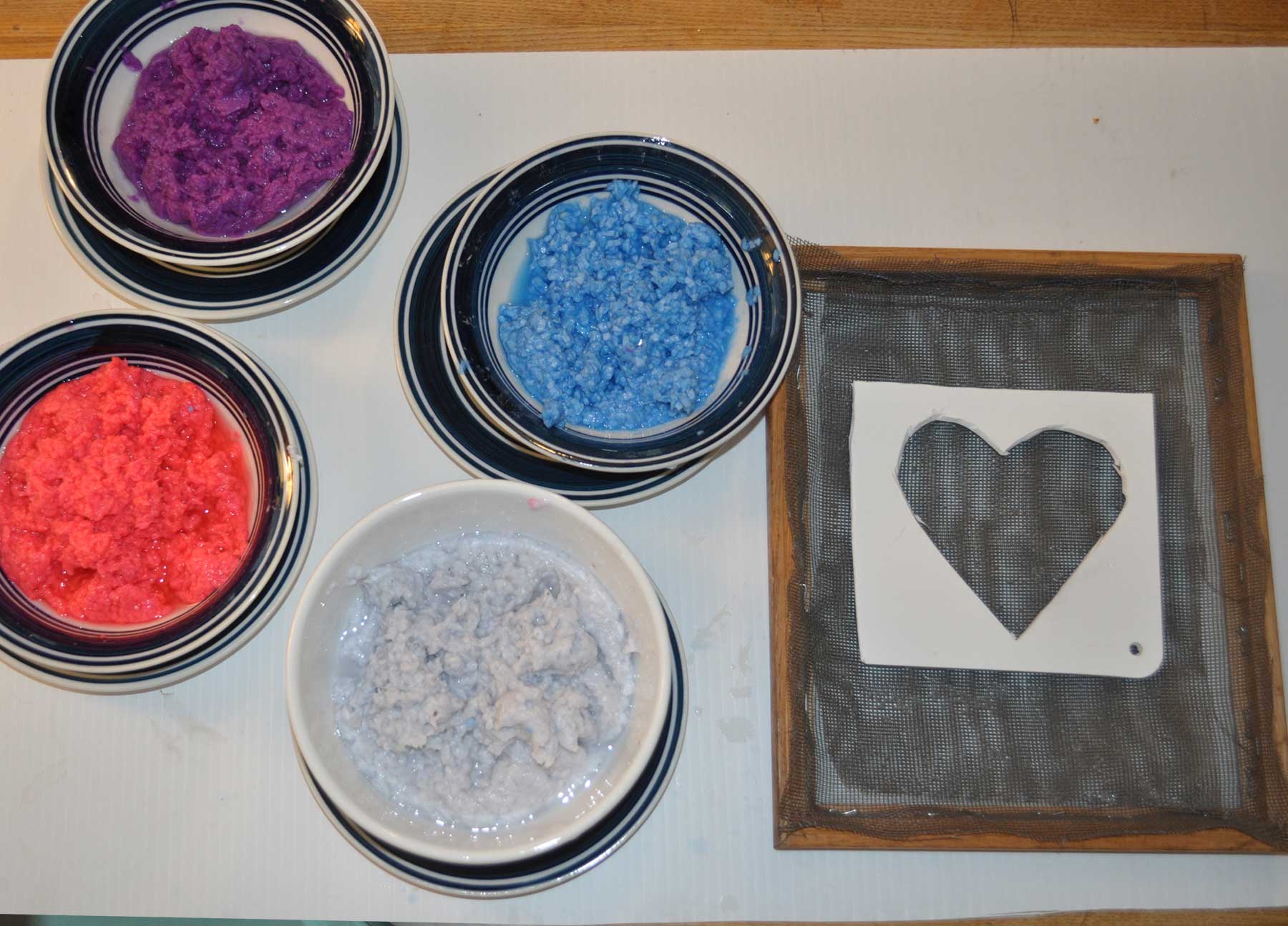
These bowls contain torn pieces of pink and purple colored office paper, as well as blue shredded paper from a gift box. (Not all shredded gift box material is paper; avoid those made from plastic, metallic, or wood fibers.)
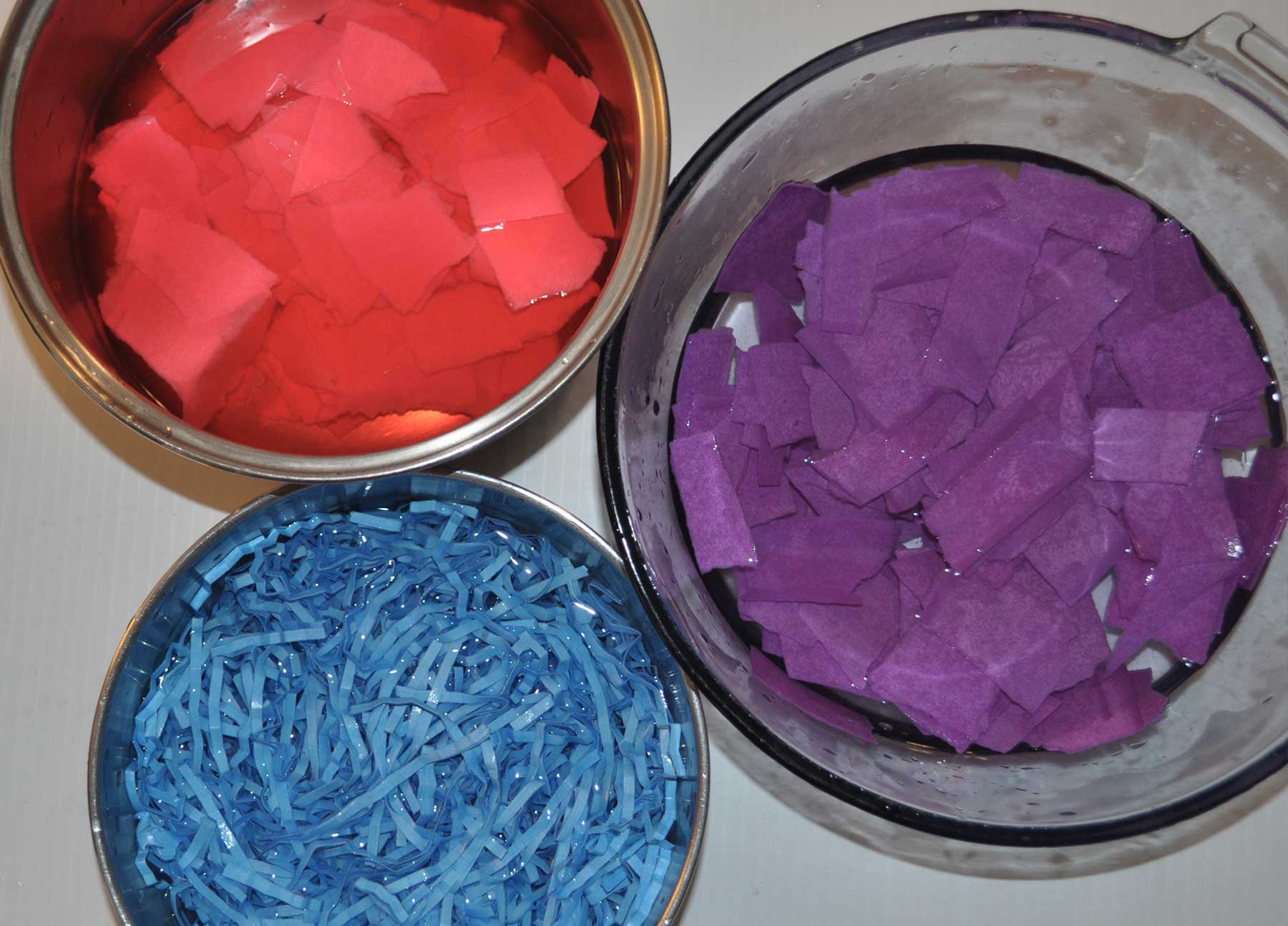
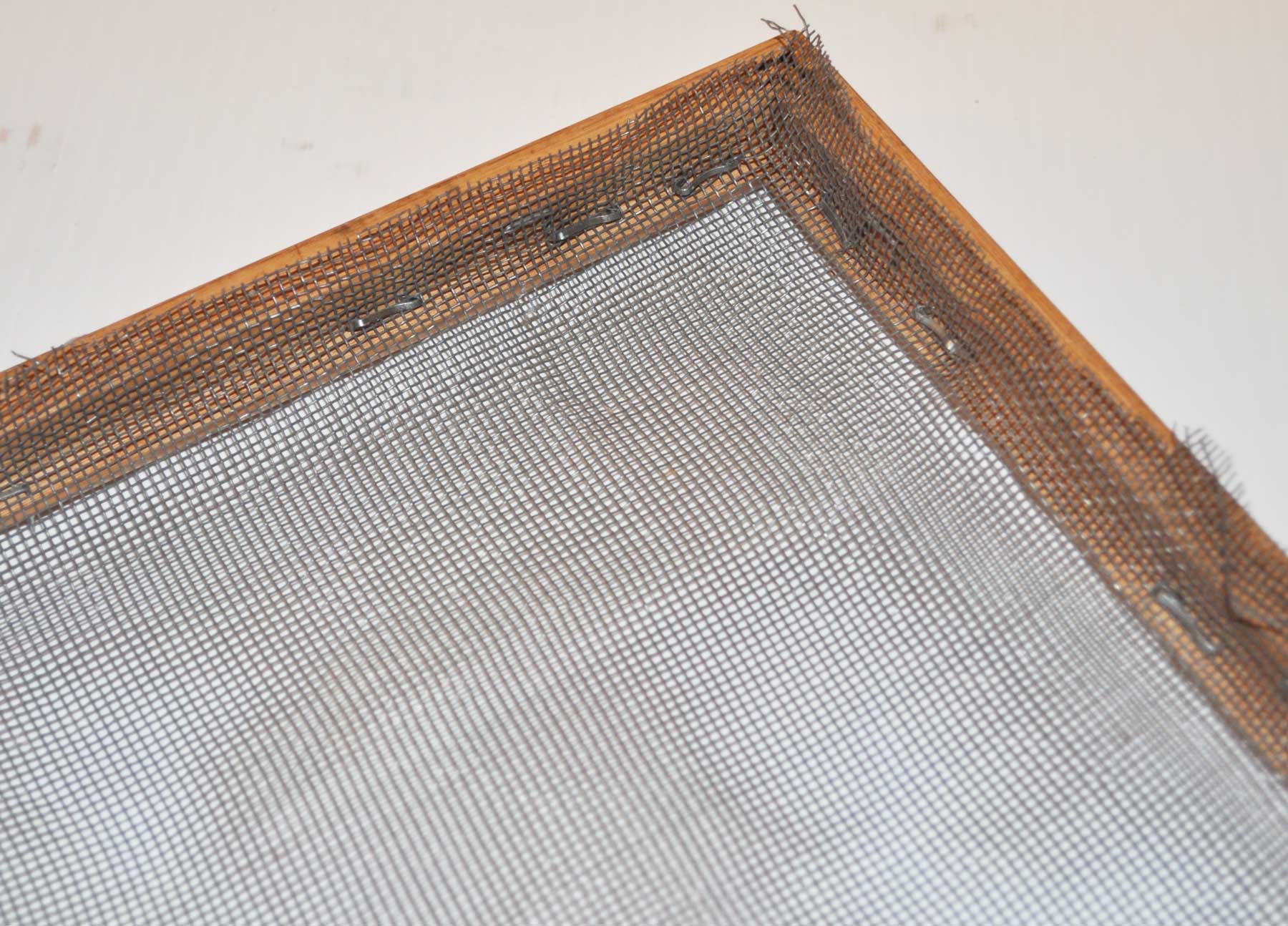
Allow the paper to soak for at least two hours. In the meantime, make the mold — the paper-maker’s term for a frame inset with a piece of screen. This example uses an old 8″x10″ wooden picture frame and some scraps of window screen. Use scissors to the screen so it’s an inch or two larger than the frame in all directions.
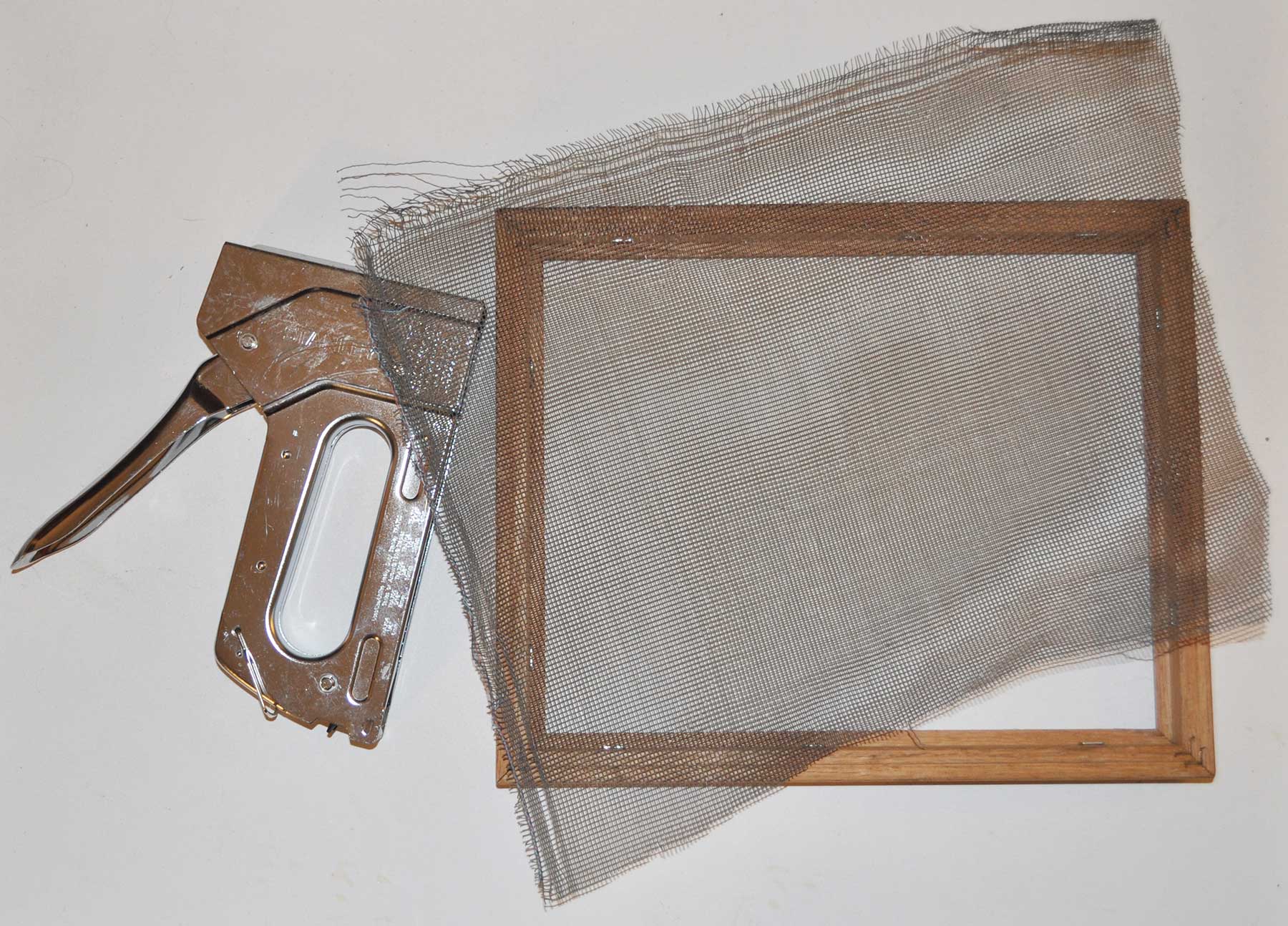
Holding the screen taut, staple it to the frame.
Cut a heart shape (or any shape you desire!) out of a 1/8″ thick rigid piece of plastic or corrugated cardboard. If using cardboard, cover all surfaces completely with packing tape, including the cut-out edge, to make it waterproof. You can also use cookie cutters!
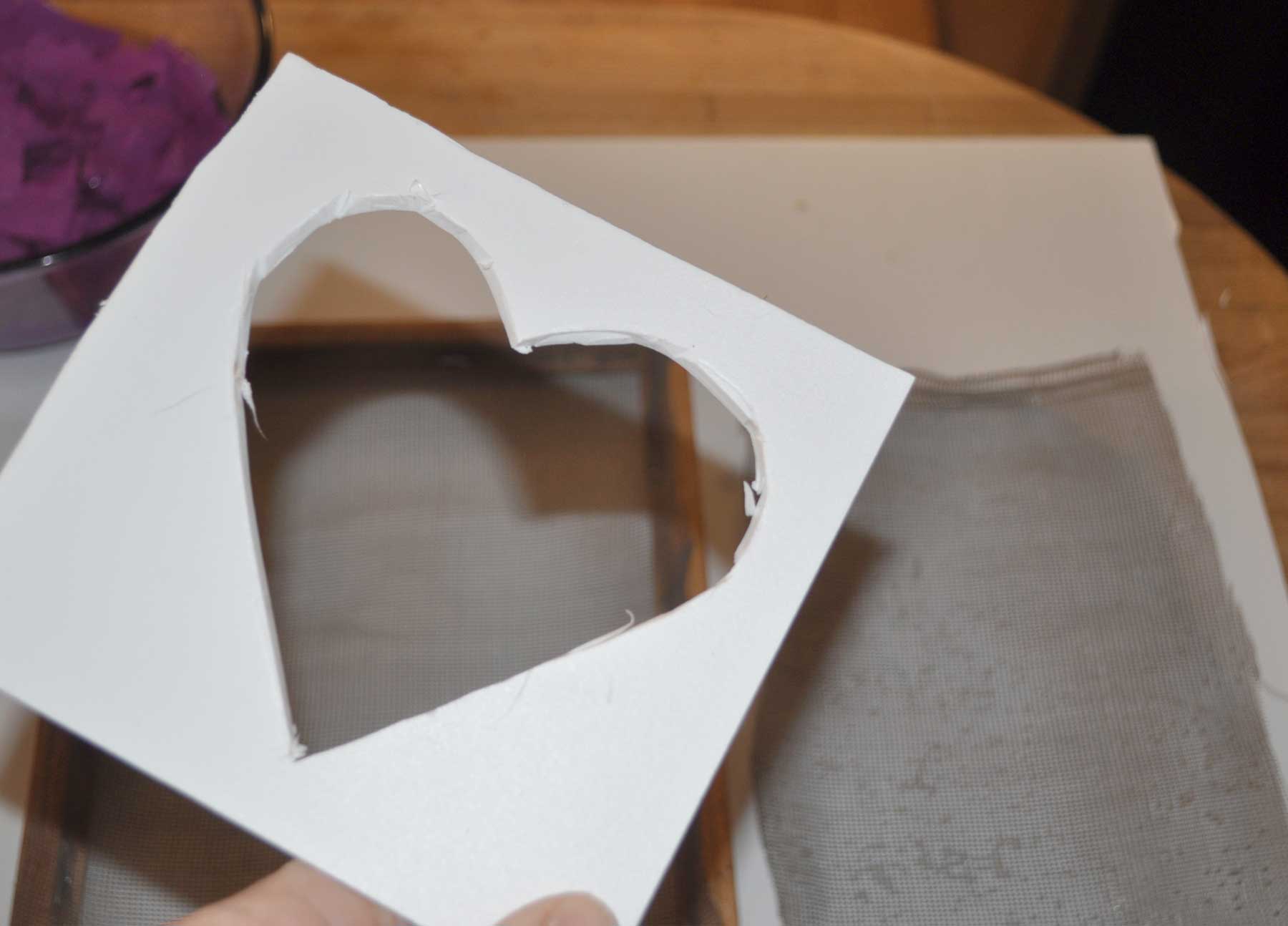
Cut a few additional pieces of screen larger than the heart cut-out. You’ll use these for transferring and drying the paper.
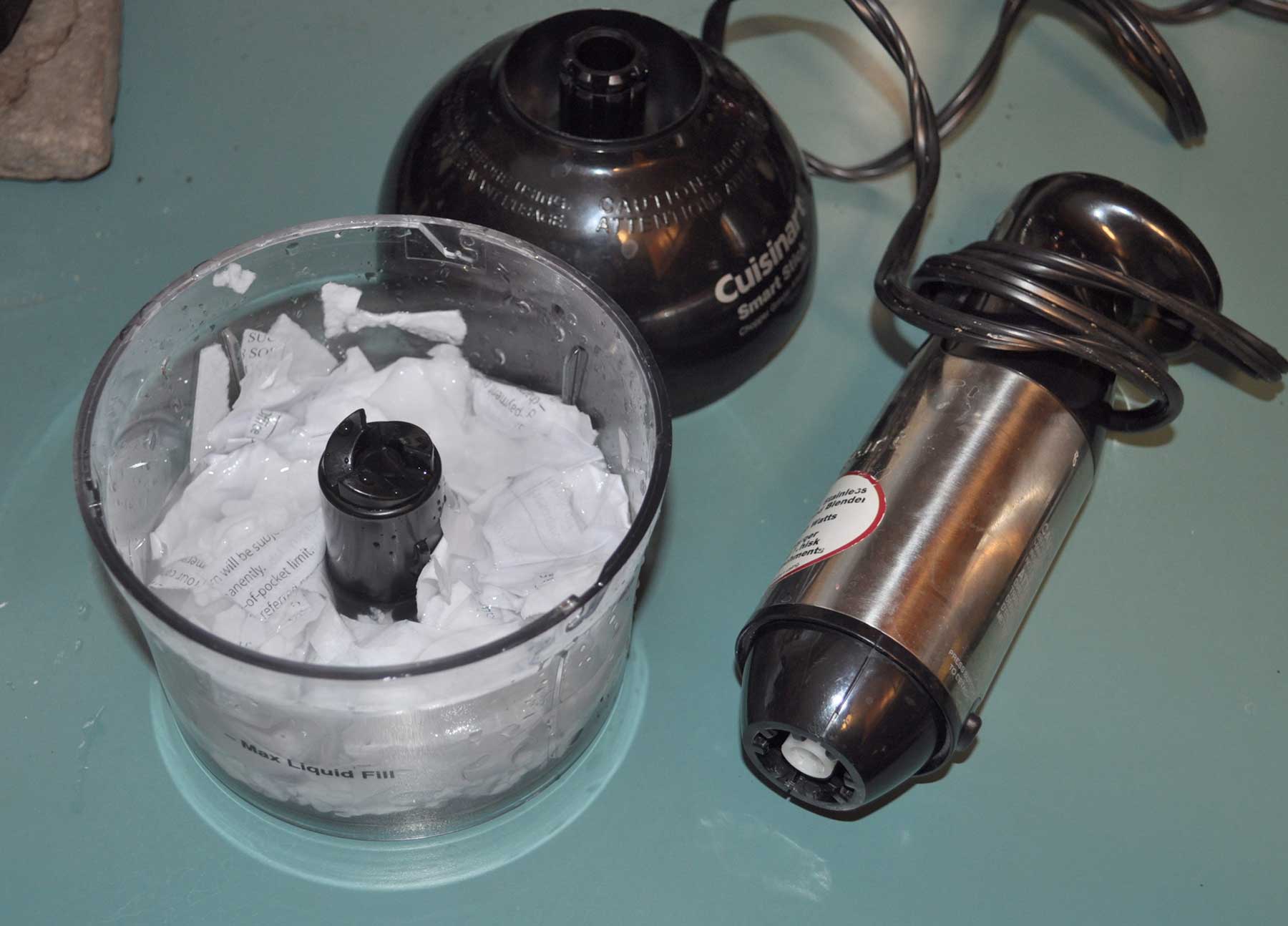
Once the paper is fully saturated, transfer some to a blender. In this case, we’re using an immersion blender with a food chopper attachment. Add enough water to almost cover the paper.
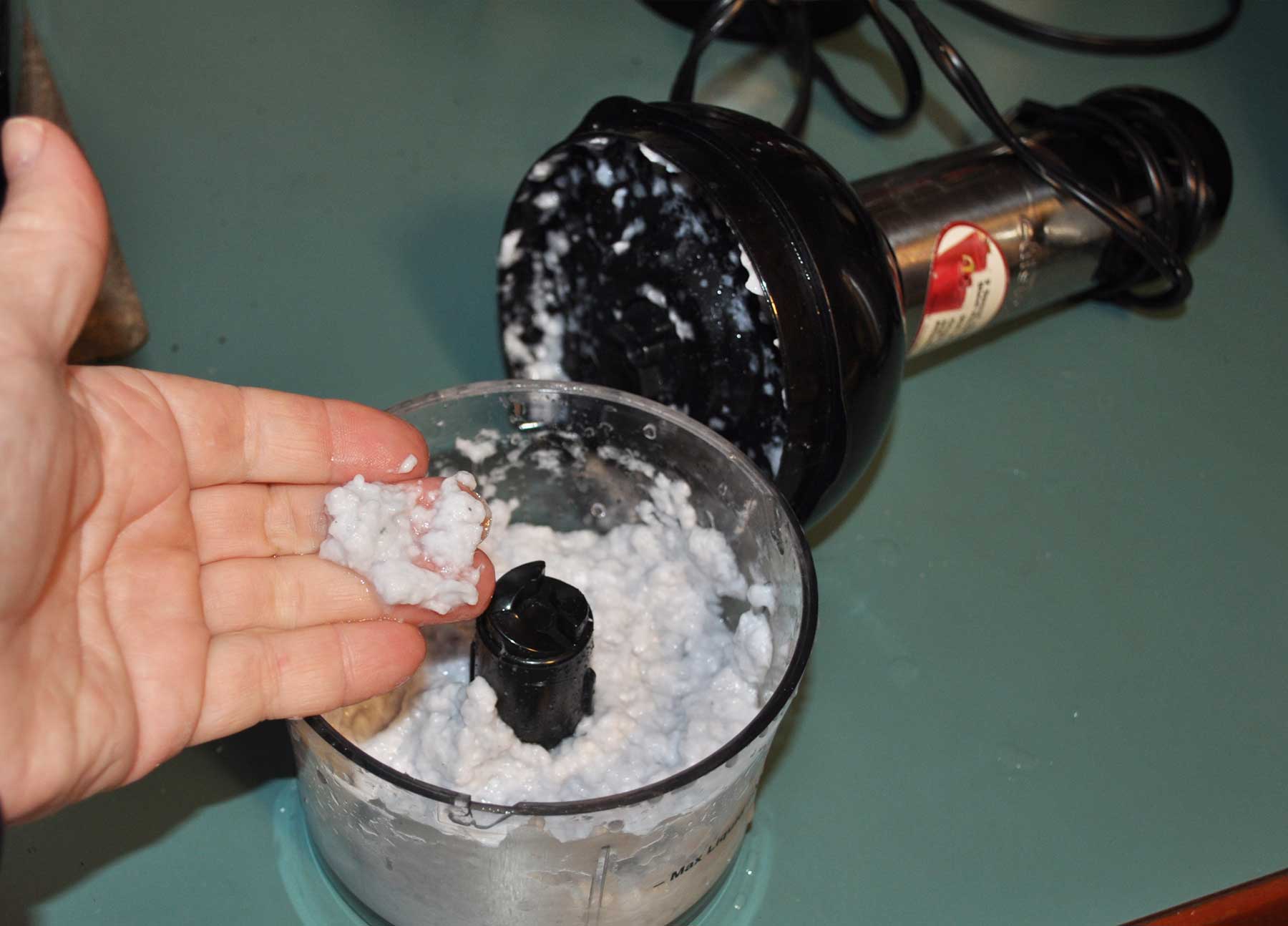
Blend until the resulting pulp resembles cooked oatmeal.
The four pulp colors have been blended and are ready to use.
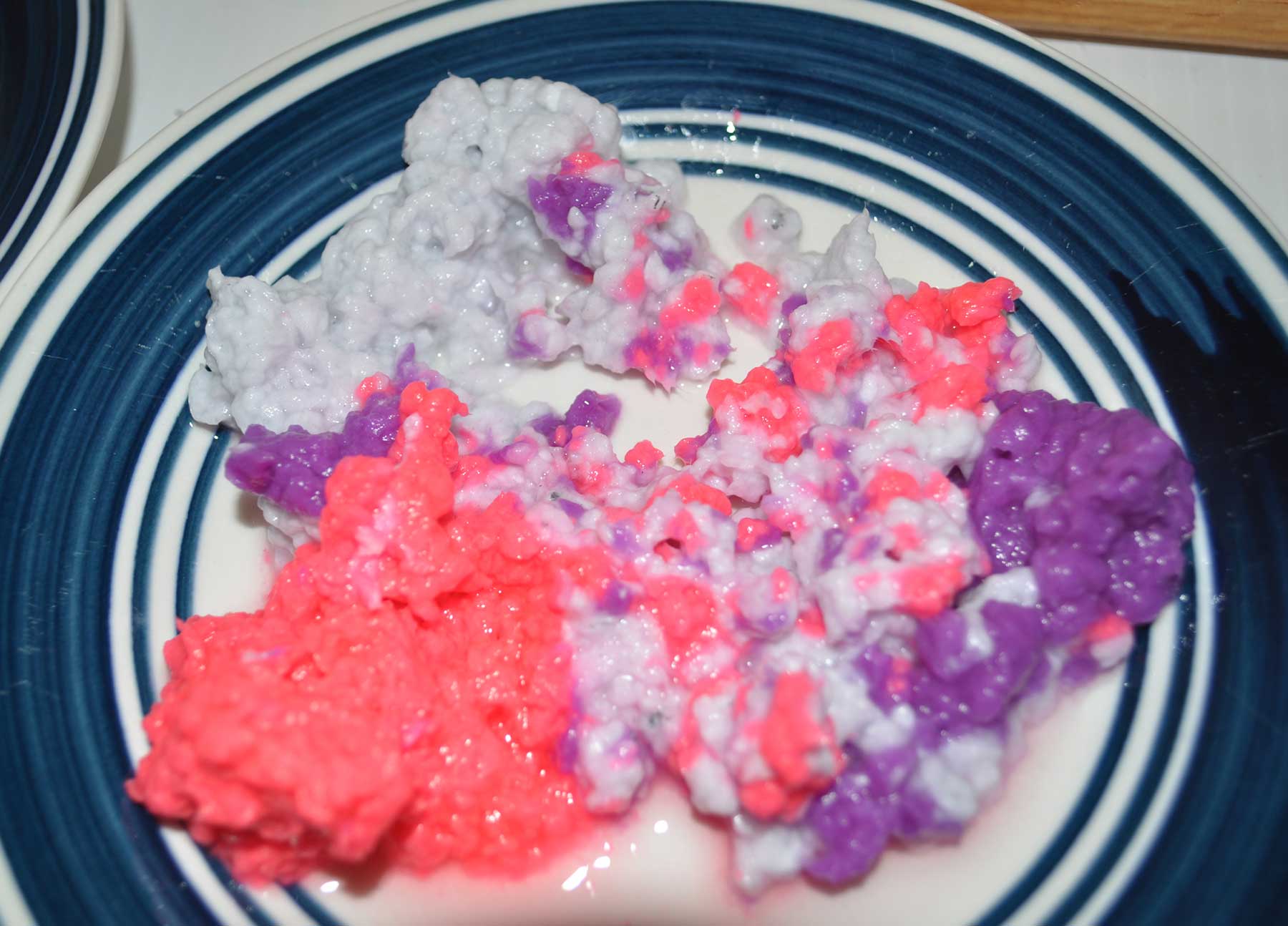
Mix colors to create a blend you like. The more you mix them, the more uniform the color of the final paper. If you like a mottled appearance, blend them less thoroughly.
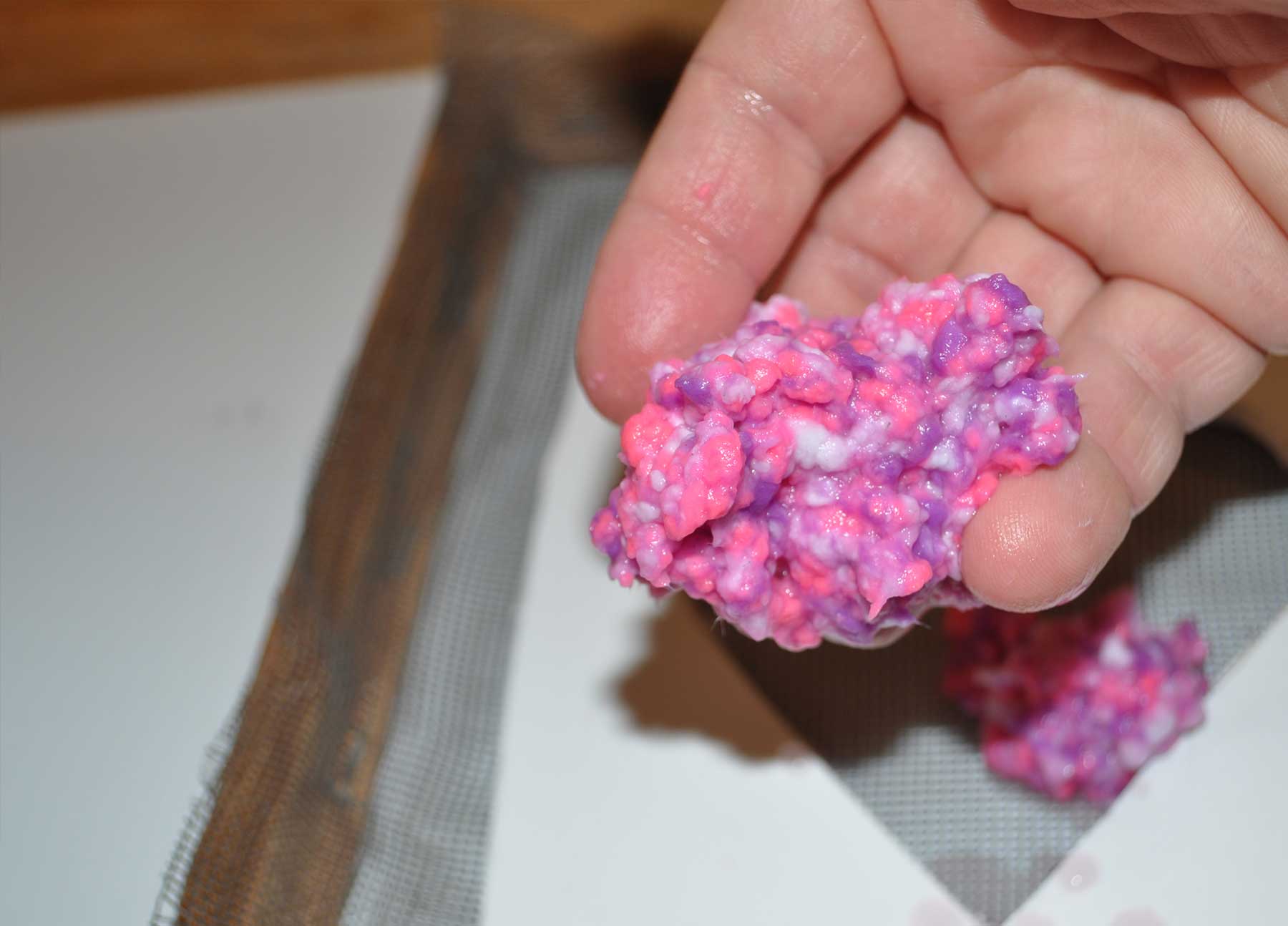
The final blend is ready to apply to the heart mold.
Cover your waterproof surface with several layers of felt, towels, rags, or old sheets. These will absorb the water. Note that the fabric may get stained from the colored paper. Place the mold (the wood frame with screen) on the fabric, and then place the the heart cut-out on top of the screen. Apply the pulp to the heart-shaped opening and press firmly. The thinner the pulp layer, the thinner the resulting sheet.
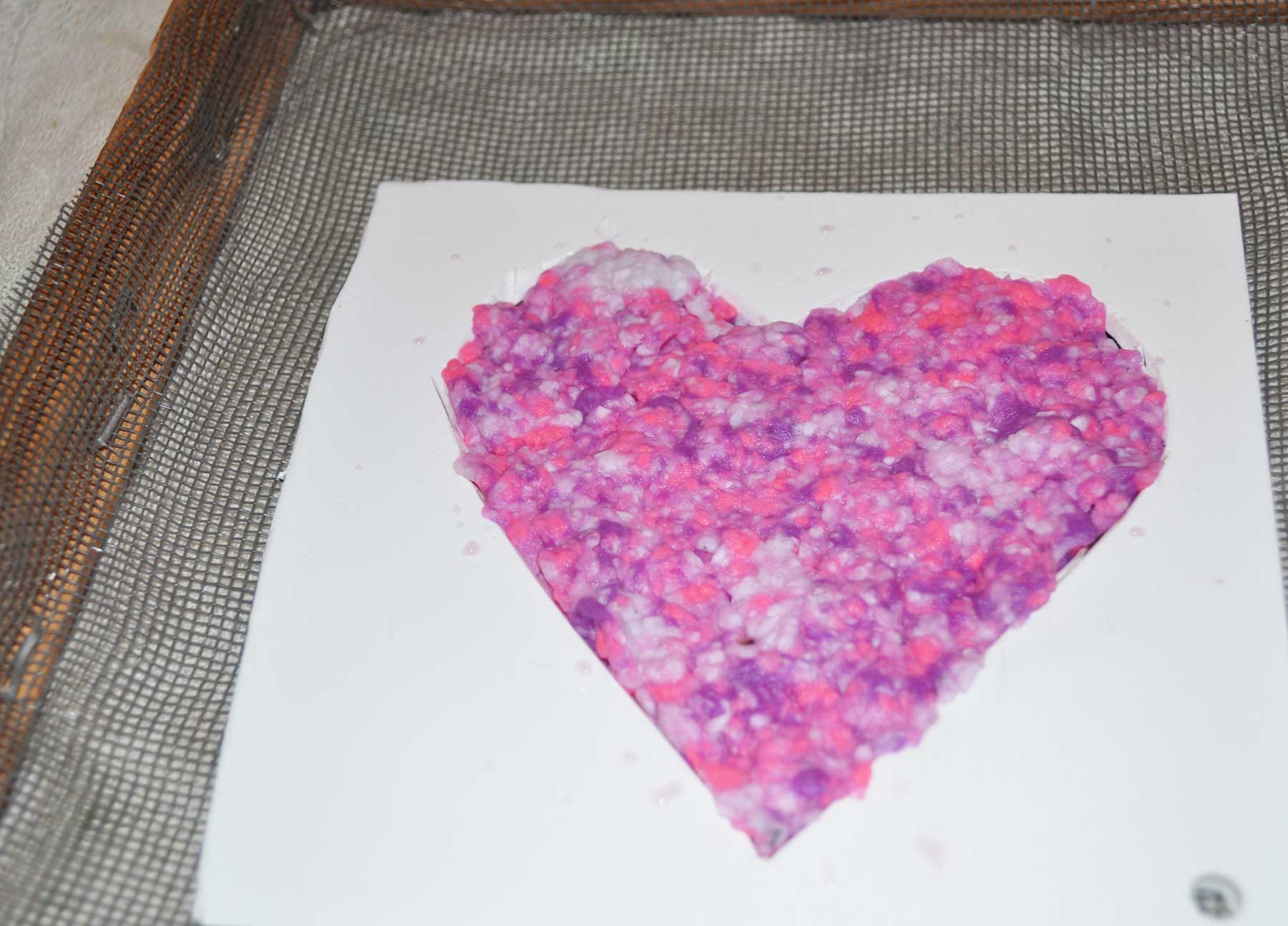
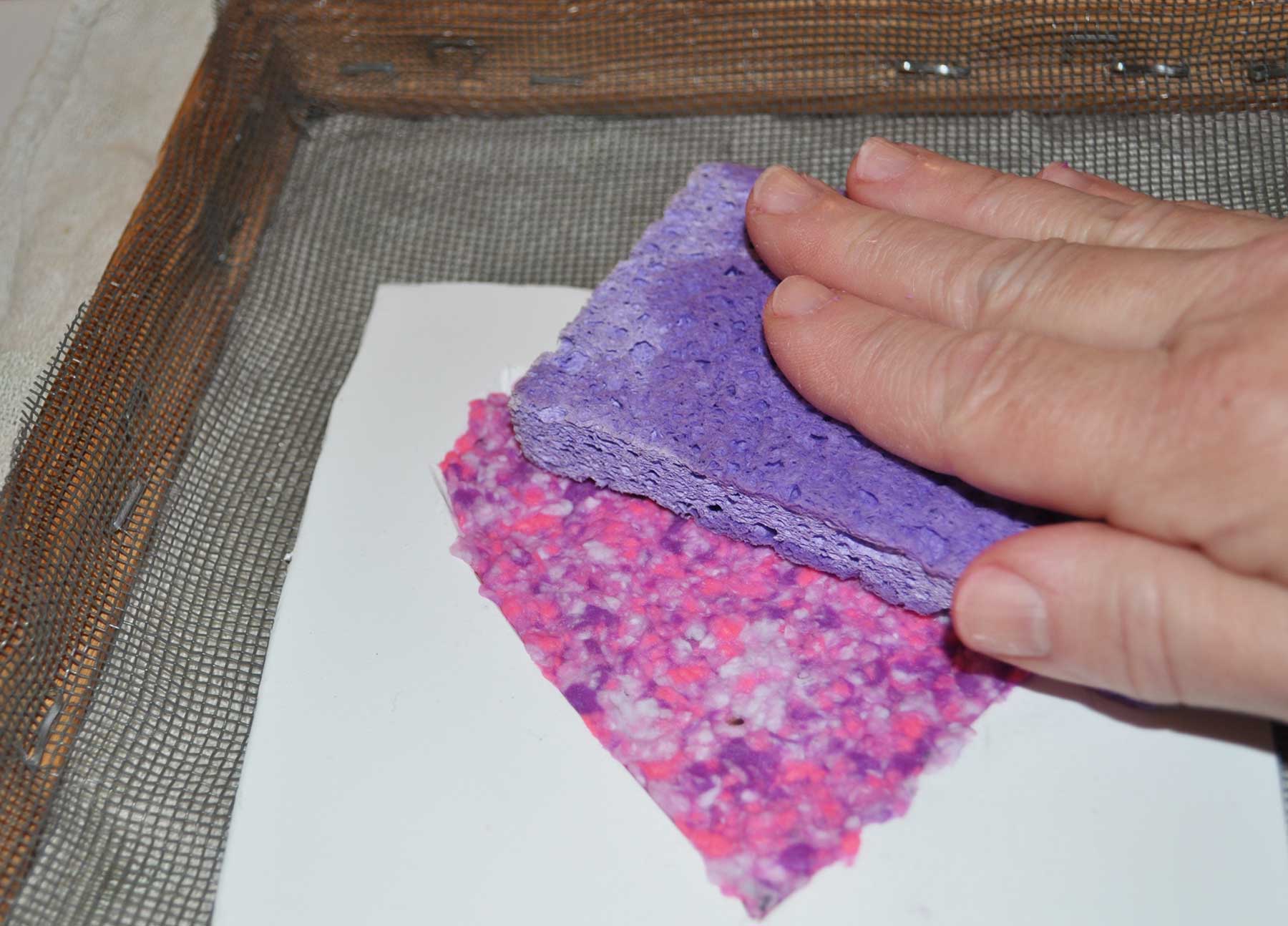
Use a sponge to compress the pulp and soak up some of the water.
Place one of the smaller pieces of window screen over the heart.
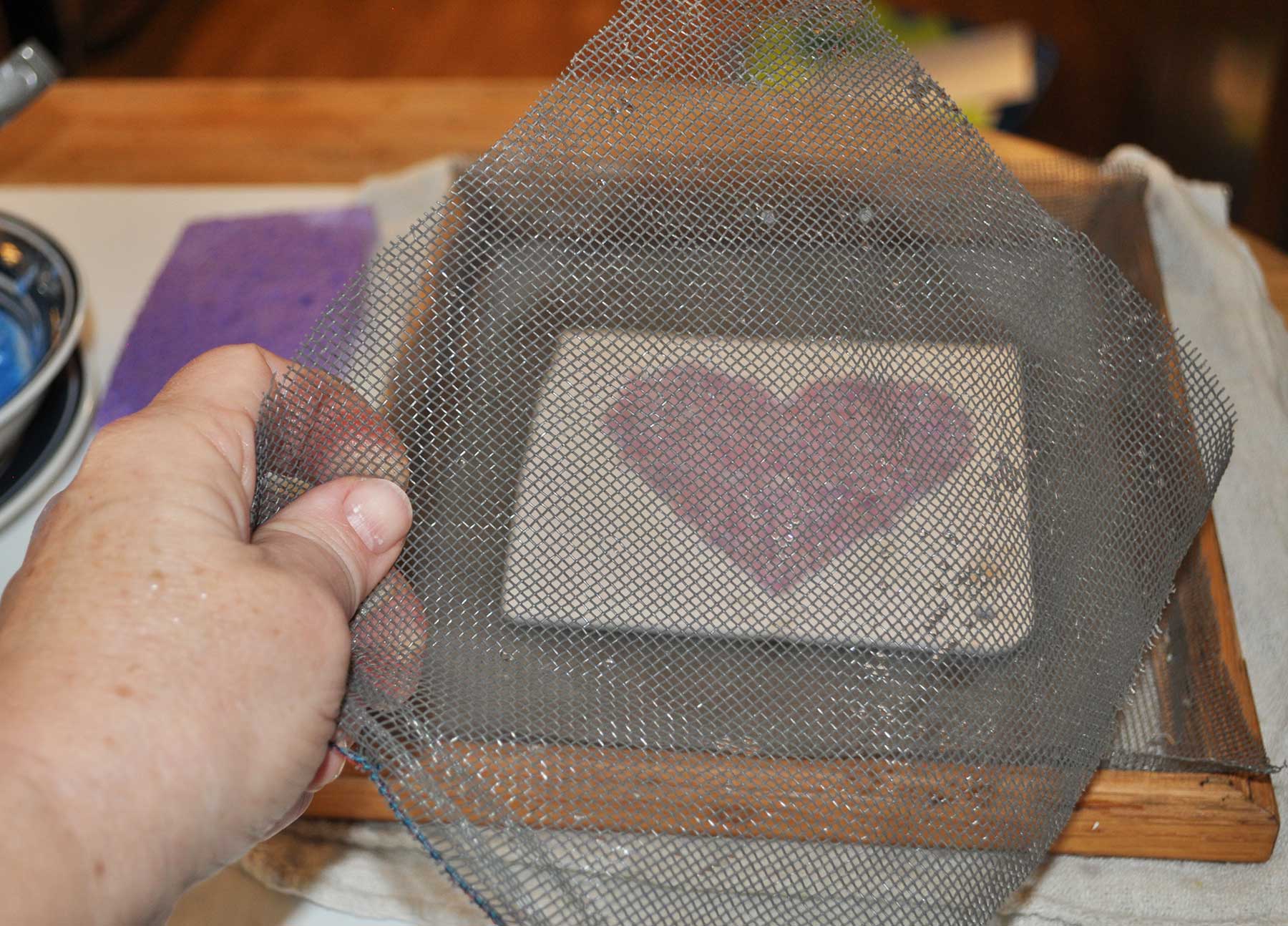
Holding the second screen firmly with your hand, flip over the frame…
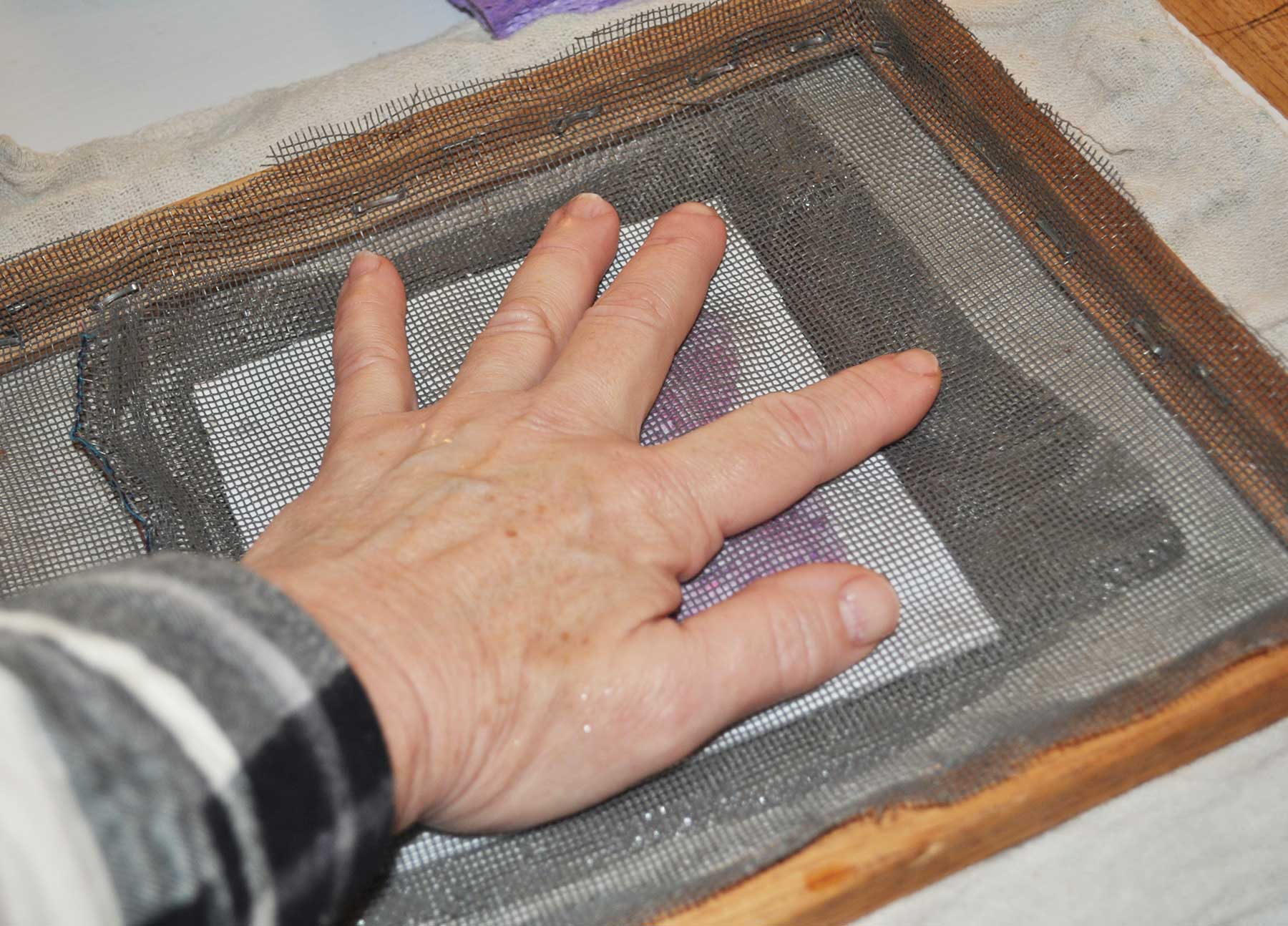
… so the heart is now resting on the loose screen.
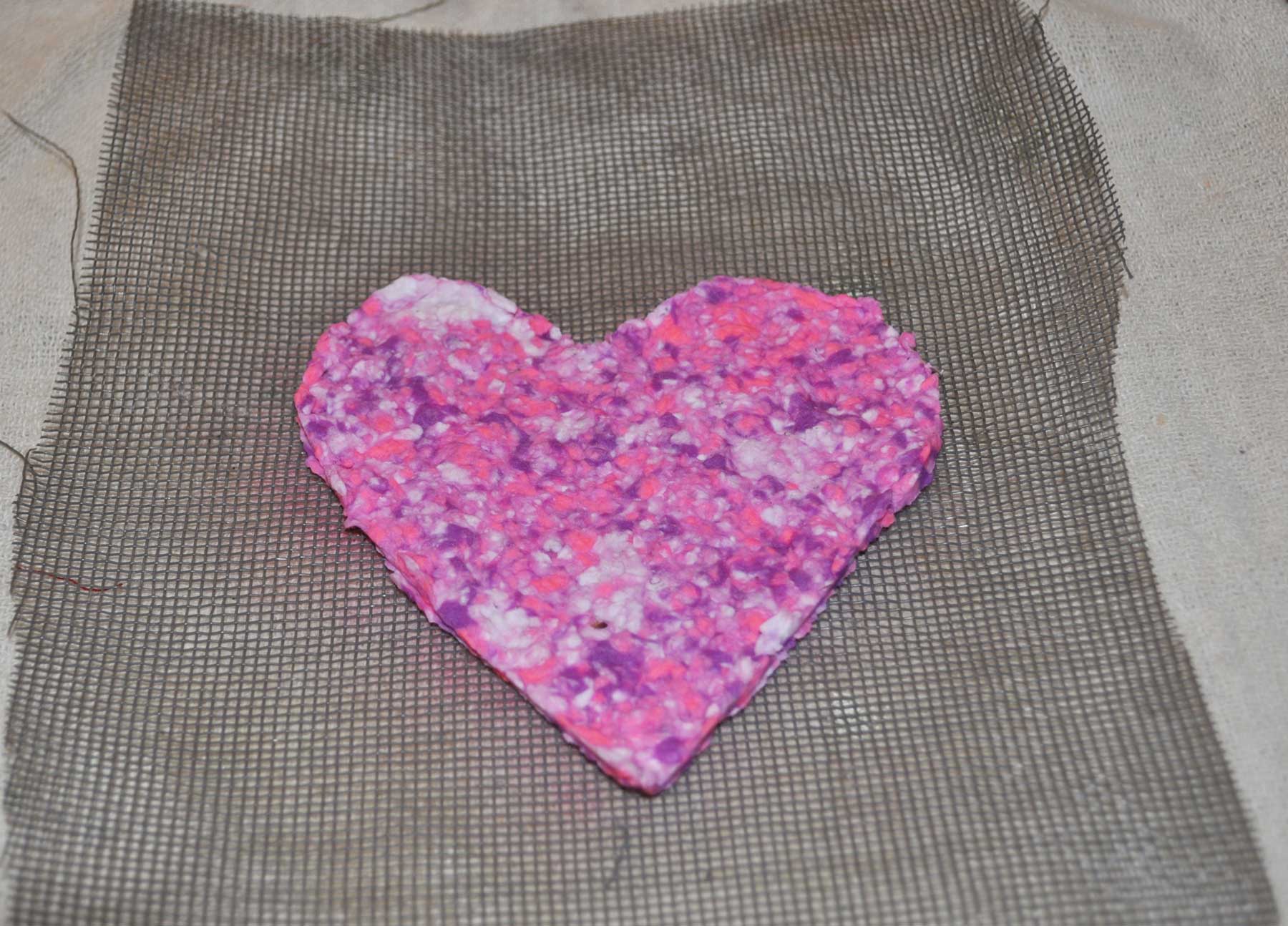
Once you’ve flipped your paper over, you can press seeds into the moist surface, such as these Johnny Jump Up seeds, to create “plantable” paper.
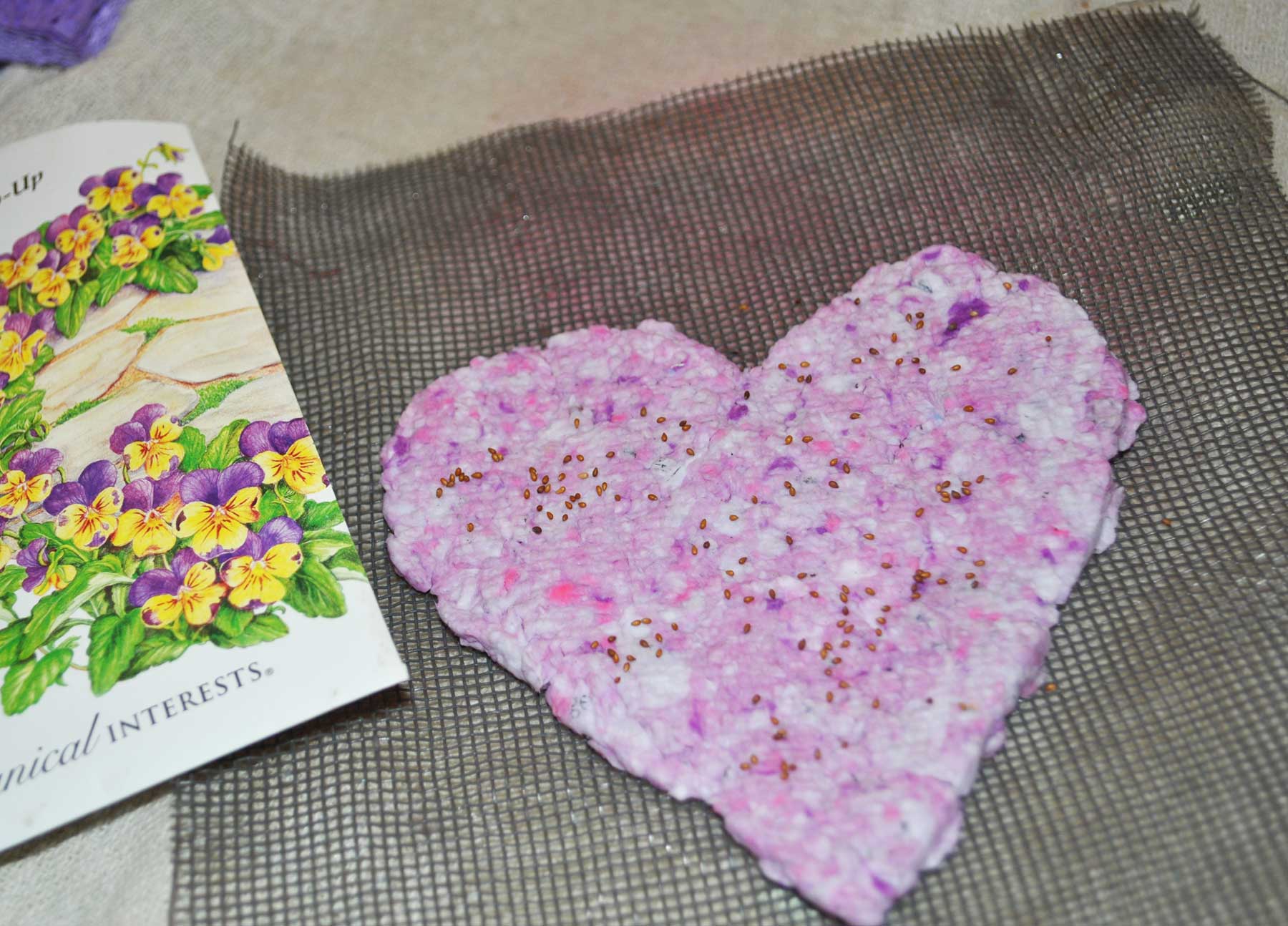
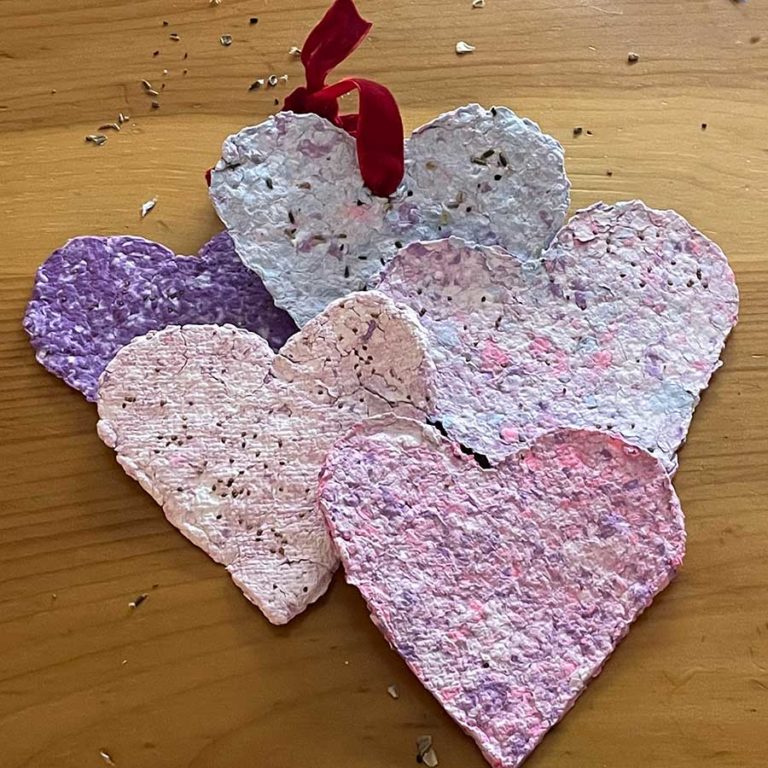
Finally, place it in a warm spot to dry. This paper is quite thick. If yours is thinner, place a weight on top to keep it flat. You can even poke a hole and add a ribbon, so the heart can be hung as an ornament until planting time!
Related Resources
Subscribe
Our FREE monthly newsletters help kids play, learn, and grow through gardening. Get the best gardening ideas for kids right in your inbox!

Excited to garden with kids?
Explore more resources, discover funding opportunities, ask questions, and learn with other gardeners in the Kids Garden Community. Join FREE today to start connecting, sharing, and growing with educators and parents just like you!