
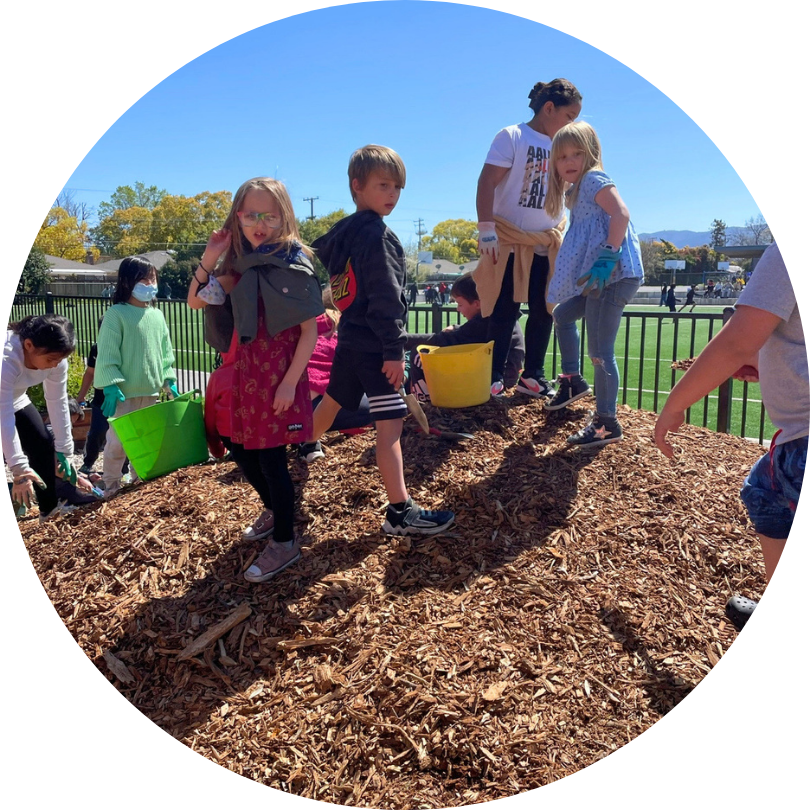
Mulching garden beds protects the underlying soil from erosion, conserves moisture, and deters weed growth. Common mulching materials include bark, shredded wood, and straw. This mulching activity offers opportunities to teach children about the importance of conserving water and caring for the soil and their plants. It’s also an active, fun opportunity to help beautify and tend the garden.
Below you will find a list of developmental skills mulching can address. In the instructions, you’ll find ideas for modifying the activity to make it accessible to learners who may have specific physical, cognitive, sensory, and social/emotional needs. This resource is designed to help ensure all children in your program can engage with and have fun in the garden.
What Skills Does This Activity Support?
Physical – Gross strength, grip strength, gross motor skills, range of motion, motor planning, balance, bilateral coordination, hand eye coordination, visual perceptual skills
Cognitive – attention, planning, problem solving, sequencing
Sensory – sensory processing, tactile, visual, proprioception, olfactory, vestibular senses
Social/Emotional – patience, resilience, teamwork, communication
Materials
- Shovel, trowel, hoe, cultivator, rake
- Gardening gloves
- Large bucket or bag
- Wheelbarrow
- Mulch
- Compost bin
- Watering can or hose
Planning Ahead
- Decide on the type of mulch. For use in perennial beds and around trees and shrubs, shredded bark and bark nuggets are popular; pine straw is also common in the southern U.S. Wood chips are another option. For vegetable gardens, straw is a popular choice because it’s lightweight and easy to pull aside for sowing seeds and planting. Avoid used mulch acquired from off-site; it’s likely partially decomposed, making it heavy and possibly containing soil-borne disease organisms. Also, avoid using hay as mulch; it likely contains weed seeds.
- Acquire mulch. You may be able to get donated wood chips from a local arborist, landscaping company, or municipal facility. Bark mulches sold in bags or in bulk, pine straw, and straw bales can be purchased at local garden centers.
- Evaluate existing mulch. If existing mulch has begun to decompose, you can leave it on the bed and just top it off with a thin layer of fresh mulch, as long as the overall mulch layer won’t exceed 3” to 4” deep. In general, plastic mulch should be removed, since it inhibits water penetration.
Activity Instructions
- Gather gardening tools. If using bulk bark mulch, you’ll need a shovel and wheelbarrow to transport it. If using bagged mulch, you can use a wheelbarrow to transport it. If you’ll be removing old mulch, you’ll need a big bag, bucket, or wheelbarrow.
- If there is old mulch on top of the garden bed that needs to be removed, use a rake to move it into a pile. To do this, place the rake on top of the mulch, then drag the rake towards your body. Rake the old much into a pile, then use a shovel to scoop it into a bag or bucket. Bring it to the compost bin and then scoop or pour it into the bin. Remove any plastic mulch and set it aside.
- Using your hands or a gardening tool, remove any weeds, grass, or dead plants from the soil. It’s best to take the time to remove them now, rather than burying them and having to dig them up later if they sprout through the new mulch. Learn how to remove weeds in the Weeding activity.
- Once the area is cleared, it is ready for a new layer of mulch. Empty the bag of mulch into a wheelbarrow, or use a scoop or shovel to fill it if using bulk mulch, then push it close to the garden. A wheelbarrow makes it easier to move mulch and scoop it out rather than carrying a bag of mulch and trying to pour it out.
- Use a shovel to scoop the new mulch onto your garden. Try to distribute the scoops of mulch evenly around the beds.
- Use your hands or a rake to spread the mulch evenly around the garden. In general, a layer of mulch that is 2” to 4” deep will smother weeds while allowing water and air to reach the soil.
- If you already have plants in your garden, keep mulch a few inches away from the plants’ stems or trunks. Piling mulch against stems and trunks can trap moisture and lead to disease problems.
- When you’re finished placing the mulch, water your garden with a watering can or hose to settle the mulch.
How to Modify this Activity for Different Learners’ Needs
Physical/Motor
- If carrying a heavy bag or wheelbarrow of mulch is difficult, divide the mulch into small buckets that may be easier to carry to the garden. Each child can carry a bucket, or multiple trips can be made by those who want to be in the bucket brigade.
- If holding the handles of gardening tools is difficult, try using different kinds of tools for scooping or spreading mulch. You can use a mug with a handle, a cup, or a bowl. Another option is to make the handles of garden tools easier to hold by wrapping them with layers of sticky medical tape or rubber bands. Children can also wear gardening gloves and use their hands as tools to scoop and spread mulch around the garden.
- If scooping mulch out from the wheelbarrow is not possible for children to do, dump the bag or wheelbarrow full of mulch out onto the garden and have children help spread it around over the soil.
- If you have a big garden space, move the wheelbarrow close to where you want to place mulch. This will be easier and less tiring than carrying big scoops of mulch across the garden with the shovel or rake.
Cognitive
- Explain and show the difference between mulch and soil. Ask children what differences they notice in color, smell, texture, etc. This will help prepare them to complete parts of the activity like scooping out old mulch and leaving the soil beneath.
- To help children maintain attention and engagement with the activity, eliminate any extra distractions from the environment. Try this activity when the garden area is not overly busy with other children doing different activities, or with everyday noises like cars, lawnmowers, or other recreational activities.
- Another way to increase engagement and maintain children’s attention for this activity is to play a game while mulching, such as 20 questions about nature or another topic of interest. Games help make activities feel more playful and fun!
Sensory
- Children who trend towards sensory craving behaviors may benefit from doing the “heavy work” involved in this task. Carrying heavy bags of mulch or pushing a wheelbarrow provides children with lots of proprioceptive sensory input.
- Activities like scooping and spreading mulch in the garden is a great way to provide vestibular sensory input. Bending up and down during these activities incorporates children’s sense of balance, facilitating sensory integration in a natural and fun environment.
- New mulch can have a strong smell! If the smell bothers children, invite them to take a break to smell nearby flowers or plants such as lavender or roses, if this is something they like. Wearing a mask will block smells. Another option for children who dislike the smell of mulch is to invite them to help with other tasks, such as bringing bags of old mulch to the compost bin, if they need a break from the smell of the new mulch.
- Have water and shade nearby, especially if doing this activity in the summer sun.
- Bring a blanket or chairs outside during this activity for children to take a seat and rest if they feel tired.
Social/Emotional
- This activity can be a lot of work for children, so make sure to implement breaks throughout the activity.
- If done in a group setting, allow children to choose a job they are interested in and comfortable with. Some children can help with transporting mulch, some can help scoop it, and some can help spread it around the garden.
- Invite children to acknowledge their own hard work and provide verbal encouragement to their peers during this activity. Ask them to express one thing they did well during the activity, and one thing a peer did well!
Related Resources
- Everyone Grows: Planting Seedlings
- Everyone Grows: Planting Container Gardens
- Everyone Grows: Weeding
Subscribe
Our FREE monthly newsletters help kids play, learn, and grow through gardening. Get the best gardening ideas for kids right in your inbox!

Excited to garden with kids?
Explore more resources, discover funding opportunities, ask questions, and learn with other gardeners in the Kids Garden Community. Join FREE today to start connecting, sharing, and growing with educators and parents just like you!