
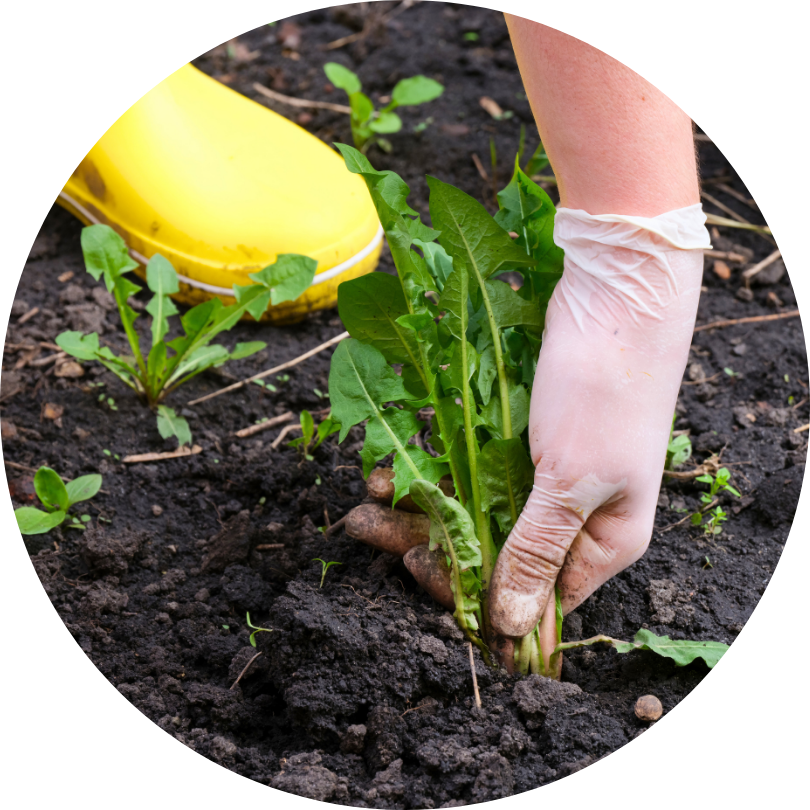
A weed is simply a plant that is growing where you do not want it to grow. “Weeds” can actually be beneficial, for instance, when their deep roots prevent soil erosion or their flowers provide nectar to hungry pollinators. That said, they can also negatively impact your garden by competing with your cultivated plants for sunlight, water, and nutrients. In this activity, children will discover the importance of learning to identify weeds and practice removing them to create a healthy, flourishing garden.
Below you will find a list of developmental skills weeding can address. In the instructions, you’ll find ideas for modifying the activity to make it accessible to learners who may have specific physical, cognitive, sensory, and social/emotional needs. This resource is designed to help ensure all children in your program can engage with and have fun in the garden.
What Skills Does This Activity Support?
Physical – Fine motor skills, pinch strength, grip strength, digit opposition, in-hand manipulation, gross strength, motor planning, gross motor skills, visual perceptual skills
Cognitive – attention, planning, inhibition
Sensory – sensory processing, tactile, visual, proprioception, vestibular senses
Social/Emotional – patience, perseverance, cooperation
Materials
- Gardening gloves
- Hoe, trowel, shovel, cultivating tools
- Bucket or bag to collect weeds
- Compost bin
Planning Ahead
- Identify weeds. Learning to distinguish weeds from your desired plants can be a challenge. If you’re unsure how to know which plants to remove, consult with a knowledgeable gardener or visit a weed identification website.
- Determine what tools you’ll need. Newly germinated weeds can be dislodged with a trowel or hoe, for example, while deep-rooted perennial weeds, like dandelions, need to be dug out.
- Check soil moisture the day before weeding. If the soil is dry, irrigate the planting bed so that the soil is moist on weeding day. This will make the weeds easier to pull.
Activity Instructions
- Survey the planting beds to determine the types and ages of weeds, and therefore the tools your young gardeners will need. They can use their hands to remove small weed seedlings from loose, damp soil. Larger weeds and those with established roots will require digging out with a hoe, shovel, or trowel. Weeds in dry or compacted soil will likely require a weeding tool.
- Anyone using their hands to weed should wear gardening gloves to protect them from sharp, prickly weeds.
- To remove a weed by hand, reach down and grasp the weed tightly between your thumb and fingers as low on the stem as you can, preferably at the base near the soil surface.
- Slowly pull the weed upwards and out of the ground, trying to keep its roots attached. It is important to remove the roots from the soil to prevent the plant from regrowing.
- If using a hoe or cultivating tool to remove weeds, adult supervision and help are required. Locate a weed and place the tool in front of it. Grasp the handle with both hands and drag the tool backward towards you with the sharp side of the blade facing towards you. For small weeds, the blade may be able to gently rest at the surface of the soil while you use the hoe. For larger, deeper weeds, apply a bit of pressure so the hoe digs in just below the soil surface to remove deeper roots.
- Collect weeds with a gloved hand, or use a shovel to scoop them into a bag or bucket, then bring them to the compost bin. Note: Although weeds will decompose along with other plant matter to create nutrient-rich compost for your garden, some weeds pose problems. Avoid composting weeds with flowers that have gone to seed, since you may inadvertently spread weed seeds when you spread your compost; weeds with thorns or prickles; and weeds with underground parts that readily resprout, such as thistle and nutsedge.
How to Modify this Activity for Different Learners’ Needs
Physical/Motor
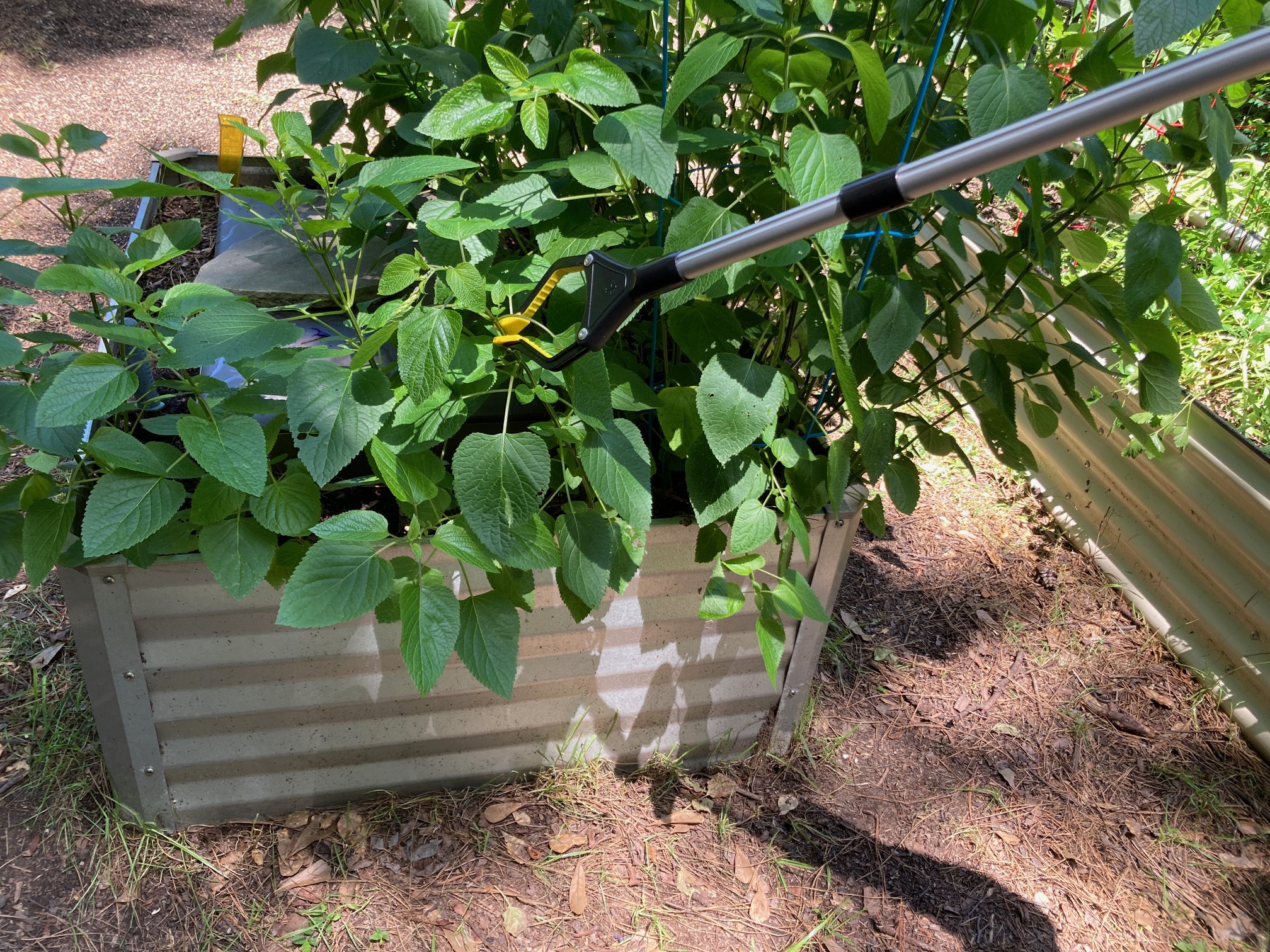
- If children have difficulty bending down, a reacher tool like the one seen here can be used to grasp and pull on weeds or pick them up and place them into a bag.
- If pinching and pulling is difficult, have children use a small trowel to gently scoop down into the soil and remove weeds and their roots.
- If children are digging bigger weeds out, wrap rubber bands around handles of gardening tools to add traction and make them easier to grasp.
- Educate children about simple body mechanics that can make weeding easier. For example, use two hands to pull out larger, deeper weeds to avoid straining the dominant arm. Sit or kneel for this activity for more leverage and to avoid any strain on the back.
Cognitive
- For children who have not used gardening tools before, demonstrate and explain how to use a hoe and cultivating tools.
- Talk to children about why we pull weeds from the garden. Explain that they can be harmful to other plants, and pulling them out is part of taking care of our garden.
- Educate children about how to identify a weed versus a plant that should keep growing in the garden. You can show them pictures or real examples of weeds that are growing outside and need to be pulled, and which plants are to be left in the ground. If you have a few common weeds, you can make laminated flashcards that can be used to help children identify the weeds in the garden. Another option is to mark the weeds in some way to confirm that they should be pulled. For few but larger weeds a small piece of yarn could be tied around the plant. For smaller, more numerous weeds, you could sprinkle flour on the leaves to help with identification.
- Increase children’s engagement in this activity by making it into a fun game or gentle competition. Challenge children to see who can fill their bag with weeds first. Everyone is a winner!
Sensory
- If children don’t want to kneel or sit directly in the dirt to pull weeds, give them a pillowcase or towel to kneel/sit on in the garden. Or, they can use a reacher.
- Have children wear sunglasses to shield their eyes from any flying dirt when pulling weeds, and a hat to keep the sun out of their eyes.
- Offer children who trend towards sensory craving behaviors the opportunity to carry heavy bags full of weeds. This type of heavy work provides proprioceptive and vestibular input!
Social/Emotional
- Weeding is a great opportunity for teamwork! Encourage children to divide up the garden into smaller sections so everyone has a designated space to weed. This can also make the task less overwhelming if there are many weeds to remove.
- If children don’t want to participate in weeding, help them find another job. They can be the weed spotter, hold the bag or bucket for other children, collect the weeds once they are pulled, or bring the weeds to the compost pile.
- While explaining to children the importance of pulling weeds and not plants, emphasize that mistakes happen. If they accidentally pull a plant while weeding, they can always replant it!
- Talk with children about safety rules before starting the activity. This activity uses sharp objects, so frequently remind them not to run with sharp objects and to be careful of the other children around them.
Related Resources
- Everyone Grows: Planting Seedlings
- Everyone Grows: Planting Container Gardens
- Everyone Grows: Planting Seeds Outside
Subscribe
Our FREE monthly newsletters help kids play, learn, and grow through gardening. Get the best gardening ideas for kids right in your inbox!

Excited to garden with kids?
Explore more resources, discover funding opportunities, ask questions, and learn with other gardeners in the Kids Garden Community. Join FREE today to start connecting, sharing, and growing with educators and parents just like you!