
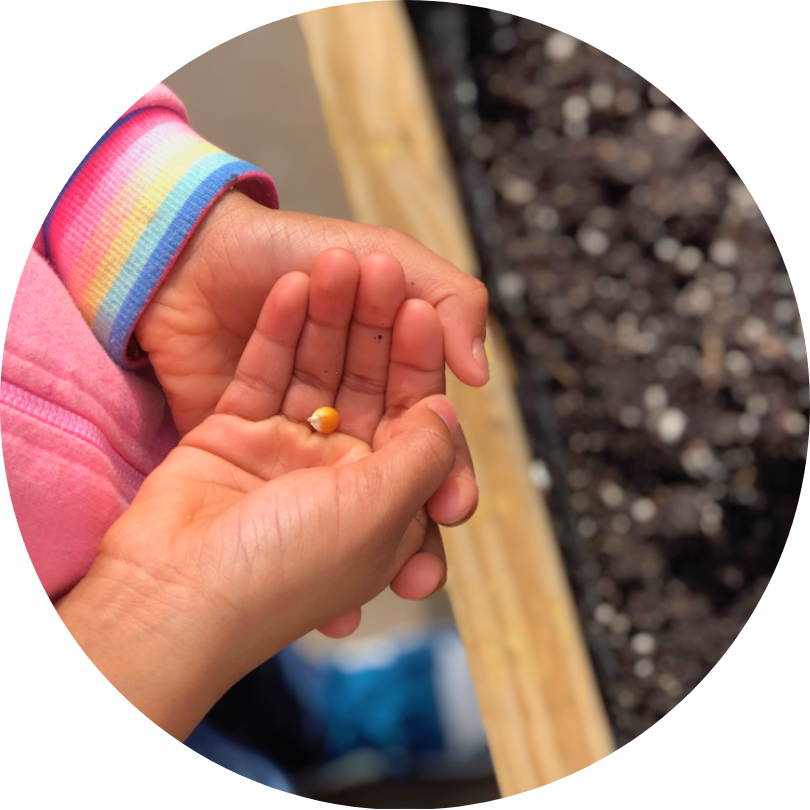
Some plants grow best when sown directly into the garden as seeds. Examples include beans and peas, root crops like carrots and radishes, leafy greens like lettuce, and many vining crops like cucumbers and squash. In this activity, young gardeners will finish preparing seed beds, sow seeds in furrows, and care for young seedlings.
Below you will find a list of developmental skills that planting seeds outside can address. In the instructions, you’ll find ideas for modifying the activity to make it accessible to learners who may have specific physical, cognitive, sensory, and social/emotional needs. This resource is designed to help ensure all children in your program can engage with and have fun in the garden.
What Skills Does This Activity Support?
Physical – Gross motor strength, digit opposition, range of motion, in hand manipulation, pincer skills, motor planning, balance, grip strength, visual perceptual skills, hand eye coordination
Cognitive – sequencing, planning, problem solving
Sensory – sensory processing, tactile, proprioception, vestibular, and visual skills
Social/Emotional – teamwork, communication, resilience
Materials
- Garden bed
- Tools for preparing soil (shovel, rake, hoe)
- Seeds (save seed packets for reference)
- Trowel
- Sand
- Watering can or hose
Optional materials for activity modifications: Child-sized disposable gloves, spice container with slotted lid
Planning Ahead
- Prepare garden beds in advance. Learn how to prepare soil for planting here: Preparing the Soil. In general, it is best to complete the bulk of the preparation work ahead of time, such as removing weeds and other plant debris and loosening the soil. Your young gardeners may be able to help with final tasks, such as raking the seedbeds smooth in preparation for planting, depending on their age and ability.
- Decide what you’ll plant. Choose crops that grow well when sown directly into garden beds, such as leafy greens, beans, corn, root crops such as radishes, carrots, beets, squash-family plants like cucumbers, melons, zucchini, and sunflowers.
- Determine optimal sowing time. Check seed packets for information on when to plant seeds. Find additional information here: When to Plant Seeds. If planting several crops, create a planting calendar to help you schedule this activity.
- Check soil moisture the day before planting. If the soil is dry, irrigate the planting bed so that the soil is moist on planting day.
Activity Instructions
- In general, it’s easiest to plant seeds in rows. That way, you’ll be able to mark the rows and know where to look for germinating seeds. Planting in rows will also make it easier to distinguish crop seedlings from weeds. Make final preparations to the seed bed by raking it smooth and removing small stones and debris.
- Read the seed packet to determine the planting depth of the crop. Make a furrow, a straight, shallow trench to that depth. You can do this by pressing the handle of a small rake into the ground, or by laying a long, straight object on the ground for reference and using a trowel or rake to dig a furrow next to it.
- Read the seed packet to determine the recommended amount of spacing between seeds. Large seeds, such as peas and beans, can be planted one by one at the appropriate spacing. Small seeds can be planted by pinching a few seeds between your fingers and scattering them in the furrow to approximate the recommended spacing. Another option for small seeds is to mix them with sand in a bowl, then sprinkle the seed-and-sand mixture into the furrow.
- Gently cover the seeds with soil using your hands, a trowel, a shovel, or a rake. Take care not to bury seeds too deeply.
- Pat down the soil with your hand or the blade of a hoe. Then use a watering can or hose to gently apply water over the row to settle the soil around the seeds, taking care not to dislodge them.
- Monitor the garden bed and irrigate as needed to keep the soil moist but not soaking wet. Keep an eye out for your new seedlings! The seed packet will give you an approximate number of days to germination; this can be as little as a few days or as long as several weeks.
- Depending on seed spacing and germination rates, the planting row may be too crowded and will need to be thinned. Check the seed packet for the recommended final spacing. Once seedlings are a few inches tall and have grown their first set of leaves, use scissors to snip off extra plants at the soil level. Don’t rip out the extra plants, as this can damage the roots of the remaining plants.
- Remove weeds to reduce competition for light and nutrients.
How to Modify this Activity for Different Learners’ Needs
Physical/Motor
- For children who use a wheelchair or have difficulty bending down, attach short gardening tools to PVC pipe using durable medical tape, so that children can reach to the ground and dig in the soil. You can also use a long cylindrical PVC pipe and have children place seeds inside as a way to transport seeds to the ground.
- Bring the garden up to the children by installing raised beds that provide roll-under capacity for children to sit facing the garden.
- Place items like a yardstick or broom on the ground to indicate to children where they should make the furrow. Paint or use brightly colored tape wrapped around the yardstick or broom handle for better color contrast.
- For children who have difficulty sprinkling seeds with their fingers, fill up a cleaned, old spice container with seeds and have them sprinkle the seeds by shaking the container over the furrows. They can also just take a pinch of seeds and toss them over the seedbed.
- Demonstrate for children the proper body mechanics for using tools in the garden, such as bending at the knees and hips rather than the back to avoid injury when digging in the soil.
Cognitive
- Explain to children the meaning of “furrow,” “row,” and “seedbed” for those who are just learning these words for the first time. It may be helpful to show a picture of these as well.
- Provide a demonstration and example of how to properly make a furrow.
- Help children with reading and implementing instructions from the seed packet. Write out a short bullet point list of the most important information for them to remember, like how far apart to plant seeds.
- Provide children with a ruler marked with a brightly colored marker or sticker at the distance that indicates how far apart to plant the seeds. You can also cut a piece of string that indicates how far apart to plant the seeds.
Sensory
- When heading outside to start the activity, encourage students to skip, hop, or crawl like their favorite animal on their way to the garden. This can be a fun and playful way to begin your gardening task, while providing calming proprioceptive and vestibular sensory input before starting the activity, so children are ready to learn!
- Encourage children who trend toward sensory craving behaviors to carry heavy objects like shovels, hoes, or rakes to the garden, or to dig in the soil.
- Children who display sensory avoiding behaviors may benefit from breaks from the activity to go to a quiet, calm space in the garden and relax.
- Have water, shade, and a place to rest available throughout the activity, especially if working on a hot day.
Social/Emotional
- Encourage teamwork during this activity. Gardening is a great opportunity to practice communication and problem-solving with peers in a natural environment.
- If done as a group activity, ensure each child has a role in the activity that highlights their strengths and interests. Give them a choice of what they would like to do and acknowledge their hard work throughout the activity.
- Be sure to remind children to have careful hands if working outside with bigger garden tools like long and sturdy shovels, hoes, or rakes. Encourage them to be mindful of other children around them, and to be careful not to swing or lift tools. This helps everyone feel safe while gardening!
Related Resources
- Everyone Grows: Planting Seedlings
- Everyone Grows: Indoor Seed Planting
- Everyone Grows: Planting Container Gardens
Subscribe
Our FREE monthly newsletters help kids play, learn, and grow through gardening. Get the best gardening ideas for kids right in your inbox!

Excited to garden with kids?
Explore more resources, discover funding opportunities, ask questions, and learn with other gardeners in the Kids Garden Community. Join FREE today to start connecting, sharing, and growing with educators and parents just like you!